
Limited Company (SPV) Buy-to-Let Mortgages After the 2026 Budget



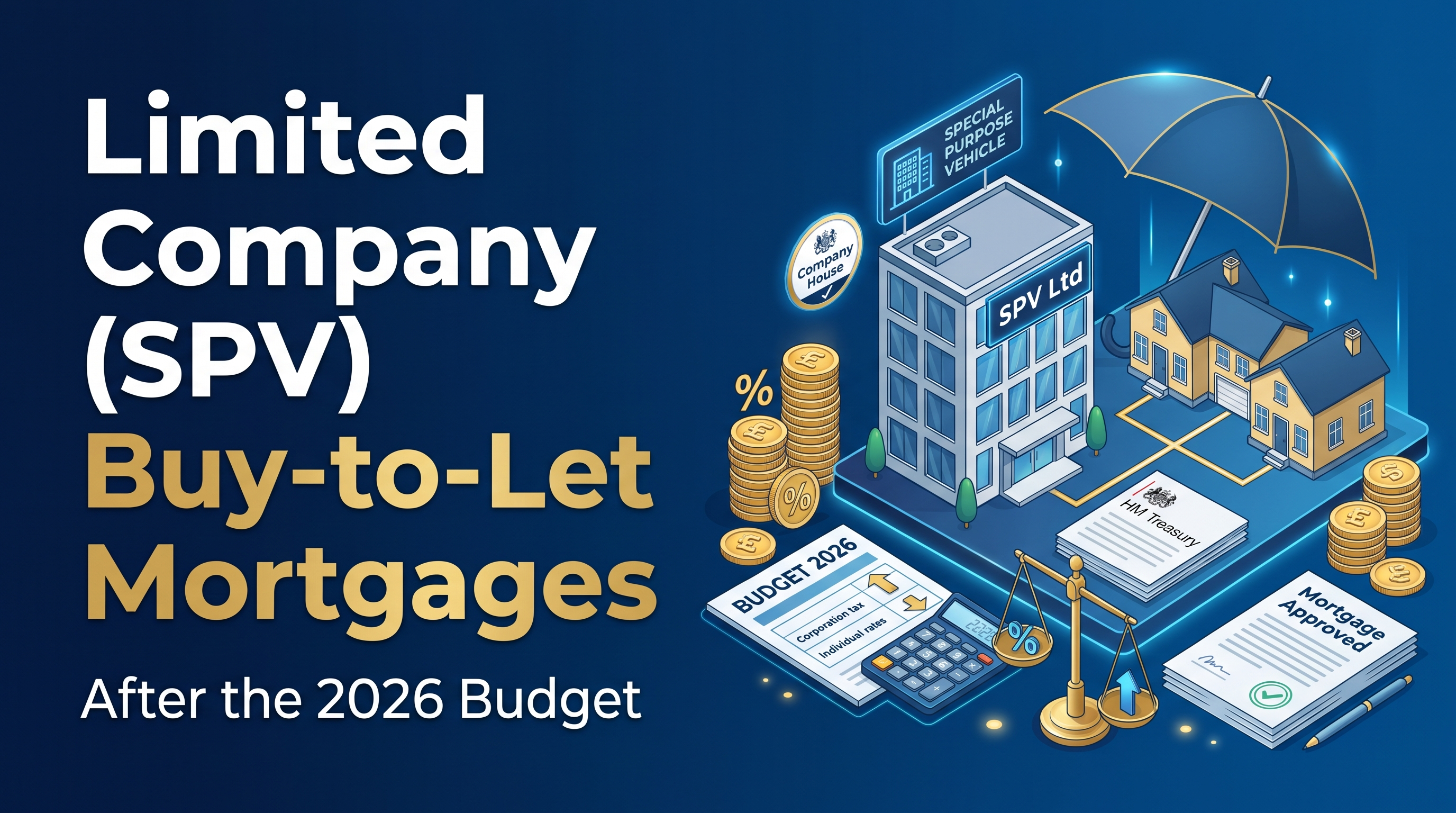
The 28 October 2026 Budget has pushed more landlords to ask one question: should my next purchase sit in a limited company? From 6 April 2027, individual landlords in England, Wales and Northern Ireland are due to pay income tax on rental profit at 24%, 44% or 49%. Company landlords pay corporation tax instead, at 19% to 25%, and can deduct mortgage interest in full.
That gap is real, but it is not the whole story. This guide explains how limited company buy-to-let mortgages work, what lenders look for and where the hidden costs sit.
What is an SPV buy-to-let mortgage
A special purpose vehicle (SPV) is a limited company set up only to buy, hold and let property. Most buy-to-let lenders prefer an SPV with property letting SIC codes, such as 68100 (buying and selling of own real estate) or 68209 (other letting and operating of own or leased real estate).
The company is the borrower. The directors and main shareholders usually give personal guarantees, so the lender can still pursue them personally if the company defaults.
Why the Budget changed the maths
Individual landlords (2027/28, as announced): tax on rental profit 24%, 44% or 49%. Mortgage interest is a tax credit at 24% only (Section 24). Profit is yours after income tax.
Limited company landlords: tax on rental profit is 19% to 25% corporation tax. Mortgage interest is fully deductible as a cost. Taking money out means dividend tax of 10.75%, 35.75% or 39.35% on top.
For a higher-rate taxpayer with a large mortgage, Section 24 is the biggest cost. Tax is charged on rent before interest, then only a 24% credit comes back. A company avoids that restriction entirely.
The new property income rates still need to pass in the Finance Bill 2026-27, so treat them as announced, not final.
The costs people forget
• Higher mortgage rates. SPV products are often priced a little above personal-name deals, though the gap has narrowed as more lenders compete. • Stamp duty on day one. A company always pays the 5% additional-property surcharge, from the first pound. • Moving existing properties is a sale. Transferring a personally owned property into your company can trigger capital gains tax (18% or 24%) and stamp duty on market value. Incorporation relief is narrow and needs specialist tax advice. • Running costs. Accounts, confirmation statements and a separate bank account add a few hundred to a few thousand pounds a year. • Extracting profit. If you need the income to live on, dividend tax narrows the advantage.
What lenders assess
1. Rental cover (ICR). Most lenders want rent of at least 125% of the stressed interest cost for companies, compared with up to 145% for higher-rate taxpayers borrowing personally. That often means a company can borrow more on the same rent. 2. Directors' credit and experience. First-time landlords can borrow through an SPV, but fewer lenders accept them. 3. Company structure. Simple SPVs are easiest. Trading companies, layered holding structures or overseas shareholders narrow the lender list. 4. Portfolio. If directors hold four or more mortgaged properties across all names, portfolio landlord rules apply: https://www.dynesourcer.co.uk/blog/complex-btl/portfolio-landlord-mortgage-uk
Is a limited company right for you
It usually suits landlords who are higher-rate taxpayers, plan to reinvest profit rather than live on it, and are buying new properties rather than moving existing ones. It suits basic-rate landlords with low borrowing less often. Speak to a tax adviser before you buy, because the structure is hard to undo.
Compare limited company buy-to-let mortgages
Check your borrowing in the complex BTL calculator. When you apply, our broker team reviews your case before it reaches the lender.
Compare limited company buy-to-let mortgages in the complex BTL calculator. HMO, MUFB, MPOT, short-term let, holiday let and other specialist property types all use this same tool.
https://www.dynesourcer.co.uk/mortgages/complex-buy-to-let-mortgage-calculator
For standard single-let buy-to-let mortgages:
https://www.dynesourcer.co.uk/mortgages/buy-to-let-mortgage-calculator
FAQs
Can a first-time landlord get a limited company buy-to-let mortgage
Yes, though fewer lenders offer it and some want you to own your home.
Do I need a personal guarantee
Almost always. Directors usually guarantee the company's mortgage.
Are limited company mortgage rates higher
Often slightly, but compare the full cost, including fees, rather than the rate alone.
Can I move my existing properties into a company
You can, but it is treated as a sale and can trigger capital gains tax and stamp duty. Get tax advice first.
Important information
Your property may be repossessed if you do not keep up repayments on your mortgage. Most buy-to-let mortgages are not regulated by the Financial Conduct Authority. Consumer buy-to-let mortgages, and mortgages where you or a close family member will live in the property, are regulated. Dynesourcer Ltd is an Introducing Appointed Representative of Dynamic Commercial Finance Ltd, which is authorised and regulated by the Financial Conduct Authority, FRN 946483. A broker fee may be payable on application; we will tell you the amount before you proceed. This article is general information, not personal advice or tax advice. Tax treatment depends on your individual circumstances and may change. Figures correct as at 29 October 2026.
Dynesourcer does not give tax advice. Speak to a qualified tax adviser before choosing an ownership structure.
Want tailored sourcing?
Use the calculator for your scenario, then move into sourcing to compare, shortlist and apply.