
Buy-to-Let Mortgage Early Repayment Charges: What Landlords Need to Know



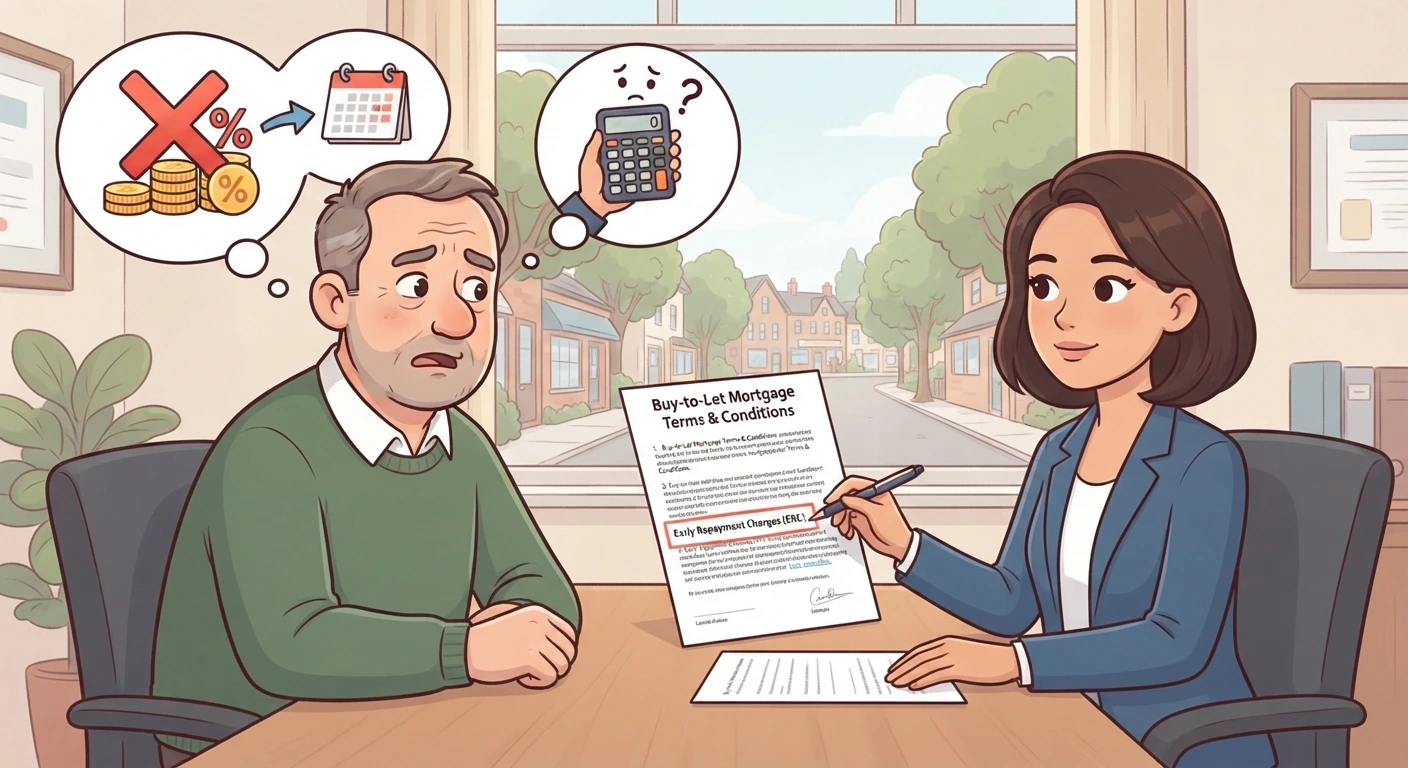
Choosing a buy-to-let mortgage involves more than comparing the initial interest rate.
Landlords should also consider the mortgage's fees, incentives, term, repayment structure and any conditions that could affect the cost of changing or repaying the mortgage early.
One of the most important considerations can be the early repayment charge, commonly referred to as an ERC.
An ERC can become relevant when a borrower repays some or all of a mortgage before the end of a specified period.
For landlords who may sell a property, refinance or restructure their borrowing, understanding the potential charge can be particularly important.
What is an early repayment charge?
An early repayment charge is a fee that may apply when a mortgage is repaid early, depending on the mortgage's terms.
The exact circumstances vary between products.
For example, an ERC may apply during a fixed-rate or other initial deal period.
The mortgage documentation should explain:
When the charge applies How the charge is calculated When the charge ends Whether overpayments are permitted Whether any exceptions apply
Always check the actual mortgage terms rather than assuming that every BTL mortgage works in the same way.
Why do ERCs matter to landlords?
Landlords may refinance or sell investment properties for a variety of reasons.
For example:
The initial mortgage deal is ending The landlord wants to raise capital The property is being sold The landlord is restructuring a portfolio A different mortgage structure is being considered
If an ERC applies, it can add to the cost of making that change.
This means that the lowest initial rate is not necessarily the only factor worth considering.
How might an ERC be calculated?
The exact calculation depends on the mortgage product.
An ERC could, for example, be expressed as a percentage of the amount being repaid.
Consider a hypothetical example:
Mortgage balance: £200,000 ERC: 3%
The potential charge would be:
£6,000
This is only an illustration. Actual ERCs vary between mortgage products and can be structured differently.
Some products may have different percentages at different points during the initial mortgage period.
Does an ERC apply if I sell the property?
It can, depending on the mortgage terms and when the sale occurs.
If a BTL property is sold while an ERC period is still running, the mortgage may need to be repaid as part of the transaction.
The borrower should therefore establish whether an ERC would apply and what the amount would be before making decisions based on a sale.
Does an ERC apply if I remortgage?
It can.
If you repay your existing BTL mortgage before the relevant ERC period ends in order to move to another mortgage, the existing lender may charge an ERC if the mortgage terms provide for one.
This is why the timing of a remortgage can matter.
A landlord should compare the potential cost of changing mortgages with the potential benefits of doing so.
What is the difference between an ERC and other mortgage fees?
An ERC is only one potential mortgage cost.
Other costs may include:
Product fees Arrangement fees Valuation fees Legal fees Broker fees Administration fees Exit fees, where applicable
The structure varies between mortgage products.
When comparing mortgages, it can therefore be useful to consider the overall cost rather than focusing on one headline figure.
Should you choose a mortgage with no ERC?
There is no universal answer.
A mortgage without an ERC may provide greater flexibility, but another mortgage may have different pricing or features.
The appropriate option depends on what matters for the individual borrower.
For example, a landlord expecting to hold a property for many years may have different priorities from an investor who expects to refinance or sell relatively soon.
This is why future plans should be considered when assessing mortgage options.
What about overpayments?
Some BTL mortgages allow borrowers to make overpayments within specified limits.
However, the terms vary.
An overpayment can sometimes trigger an ERC if it exceeds the amount permitted under the mortgage agreement.
Before making a large overpayment, check the mortgage's terms carefully.
Product transfer or remortgage?
When an initial mortgage deal is approaching its end, a landlord may consider whether to:
Remain with the existing lender
or
Move to another mortgage/lender
A product transfer can involve changing to a new deal with the existing lender, while a remortgage involves taking a new mortgage, potentially with a different lender.
The appropriate route depends on the circumstances and the available options at the time.
Costs, rates, flexibility and eligibility can all be relevant.
Why timing matters
Imagine a landlord has a mortgage with an ERC that expires in six months.
If the landlord refinances immediately, an ERC might apply.
If the landlord waits until the ERC period has ended, the charge may no longer apply, subject to the mortgage terms.
However, mortgage rates and product availability can change during that period.
This illustrates why timing involves more than simply waiting for a particular date.
Check the full mortgage cost
When comparing BTL mortgage products, consider:
Initial rate Mortgage term Product fee ERC Overpayment rules Exit costs Valuation costs Legal costs Other applicable fees
A mortgage should be assessed against your circumstances and objectives rather than simply selecting a product based on one feature.
Explore BTL mortgage products with Dynesourcer
If you are reviewing your existing BTL mortgage or planning a future purchase, Dynesourcer's Buy-to-Let Mortgage Calculator can help you explore available mortgage products based on your borrowing requirements.
https://www.dynesourcer.co.uk/mortgages/buy-to-let-mortgage-calculator
When comparing products, remember to consider the complete mortgage cost and the relevant terms, including any early repayment provisions.
Frequently asked questions
What is an ERC on a buy-to-let mortgage?
An early repayment charge is a fee that may apply when a mortgage is repaid early, depending on the mortgage terms.
Can I remortgage if my BTL mortgage has an ERC?
Potentially, but repaying the existing mortgage before the relevant ERC period ends may result in a charge.
How much is a BTL early repayment charge?
It varies between mortgage products and can depend on when the mortgage is repaid and the amount being repaid.
Can I avoid an ERC?
Some mortgage products may have no ERC or allow certain repayments without a charge. The specific mortgage terms determine what is permitted.
Should I wait until my ERC expires before remortgaging?
That depends on the circumstances. The potential ERC needs to be considered alongside available mortgage rates, fees, eligibility and the potential benefits of changing mortgage.
Important information
This article is for general information purposes only and does not constitute financial advice or a recommendation to apply for a particular mortgage. Mortgage rates, fees, early repayment charges and lender criteria vary between products and individual circumstances. Your property may be repossessed if you do not keep up repayments on your mortgage.
Want tailored sourcing?
Use the calculator for your scenario, then move into sourcing to compare, shortlist and apply.